

Most parents assume their job in the early years is to keep their child happy, healthy, and entertained until school takes over. Kindergarten will handle reading. That is what school is for.
But that assumption is costing children something real. The years before school are not a waiting room. They are some of the most valuable learning years a child has. And the parents who understand that early are giving their children a head start that school will spend years trying to close for the kids who did not get it.
You do not need special training to start. You do not need special materials. You just need to understand what early reading foundations actually look like, and then show up for ten minutes a day.
The Value of Starting Before School
Here is a number worth sitting with: 68 percent of fourth graders in the United States are reading below proficient, according to data from the National Assessment of Educational Progress. Proficient means grade-appropriate reading ability. That is not a small group of struggling kids. That is the majority of children.
School absolutely can teach children to read. Teachers work hard and most children do learn. But a classroom teacher with 20 to 30 students simply cannot give each child the individual, one on one attention that a parent at home can. The two are not in competition. They work best together.
Research consistently shows that children whose parents are actively involved in early literacy practice at home tend to outperform those who rely on school alone. Not because school is failing them, but because the combination of parent involvement and classroom instruction is more powerful than either one on its own.
A child who arrives at kindergarten already familiar with letter sounds and basic blending is not ahead because school let them down. They are ahead because a parent gave them a running start. School then builds on that foundation rather than laying it for the first time. That is the advantage early exposure gives a child, and it is entirely within reach for any parent who starts now.
The Early Years Are the Best Years to Start
A child does not need to be a certain age before a parent starts introducing letter sounds. A parent can begin as early as age two, not with drills or tests or structured lessons, but with simple, playful exposure.
Point to the big letter M on a cereal box and say its sound out loud. Notice the letter on a road sign while you are driving. Say a word slowly in the car and ask your child what sound it starts with. None of this looks like a reading lesson. All of it is building something real.
A young child who hears a parent connecting letters to sounds regularly is beginning to absorb that connection, even when it does not look like much is happening on the surface. The understanding that letters make sounds, that those sounds can be put together into words, is forming quietly in the background. That understanding becomes the foundation everything else is built on.
Starting early is not pressure. It is a head start.

Letter Sounds Before Letter Names
Most parents start with the alphabet song, and that is completely fine. But there is something more useful to teach alongside it that most parents never think about: the sounds those letters make.
Knowing that a letter is called "aitch" does not help a child read the word hat. Knowing that it makes a quiet breath sound, like the beginning of hat or hand, does. Letter names and letter sounds are two different things, and sounds are what actually unlock reading.
A child does not need to know the alphabet song before starting phonics practice. You can begin with sounds from day one. Pick a letter, say its sound, point to it, and let your child hear it regularly. That is enough to start. The names will follow naturally.
A Simple Starting Point Any Parent Can Follow
You do not need a curriculum or a plan. You need a piece of paper and a willingness to sit beside your child.
Write a simple word. Point to each letter from left to right and say its sound clearly. Then slide your finger under the word slowly as you blend the sounds together. A helpful tip: encourage your child to stretch the sounds directly into each other without pausing in the middle. Think of it as one smooth sound rather than two separate chunks with a gap between them. Keeping the sounds connected is what makes the word click together. Let your child watch you do this several times before asking them to try. Even if they just observe, that is valuable. Watching a parent sound out a word is one of the most natural ways a child learns what reading actually looks like.
Start with two letter combinations like AT, IT, UP, and ON before moving to three letter words. Two sounds are much easier to blend than three, and that first successful blend, the moment AT clicks together from two sounds, builds a confidence that keeps a child coming back. There is no rush and no rigid sequence. Follow your child.
Make It Playful, Especially With Young Children
Learning does not have to feel like a lesson, especially with very young children. Simple games make early exposure feel natural and something to look forward to rather than a chore.
I spy with sounds. Instead of saying "I spy something beginning with the letter B," say "I spy something that starts with the same sound as ball or boat." This trains the ear to hear sounds inside words rather than just associating letters with their names. Keep the sound short and clipped when you say it, not stretched out, so your child hears it cleanly.
Sound hunts. Pick a letter sound and walk through the house together looking for things that start with it. The sound mmm: milk, mat, mirror, mug. A two year old can do this and love it.
Sound of the day. Pick one letter sound in the morning and notice it everywhere throughout the day. On signs, in books, in words you say. One sound done consistently is worth more than ten sounds done superficially.
Slow blend game. A parent slowly blends sounds out loud and the child guesses the word. Sssss... aaaa... t. What is that word? Children find this delightful and it teaches blending without any materials at all.
None of these require anything. They can happen in the car, at the dinner table, at the grocery store, anywhere. The exposure is building something real even when it feels like play.
You Do Not Need Special Materials
A piece of paper, a pencil, and ten minutes is genuinely enough to start. The materials matter far less than the consistency and the presence of a parent who makes the process feel safe and positive.
Keep sessions short. A young child's attention span is not built for long lessons. Ten focused minutes is more valuable than thirty distracted ones. A session that ends on a positive note, with a child feeling capable, is worth more than a longer session that ends in frustration.
The goal is not to cover a lot of ground in any single session. The goal is to show up consistently, keep the tone positive, and trust that small efforts made regularly will compound into something real. They will.
The Head Start That Actually Matters
The goal is not for your child to be fully reading before kindergarten. That is not the point and parents should not feel pressure around that. Not every child will be reading independently before school and that is completely normal.
The point is something more achievable and more powerful: a child who arrives at kindergarten already familiar with letter sounds and basic blending does not feel overwhelmed. The material feels almost like review. The other children are learning something new. Your child is building on something they already know. That confidence in those early school days is enormous and it compounds over time.
School then strengthens what they already have rather than starting from scratch. And that head start, built quietly at home through small consistent moments, is one of the most meaningful things a parent can give a child in the early years.
A Tool That Makes Reading Practice Easier
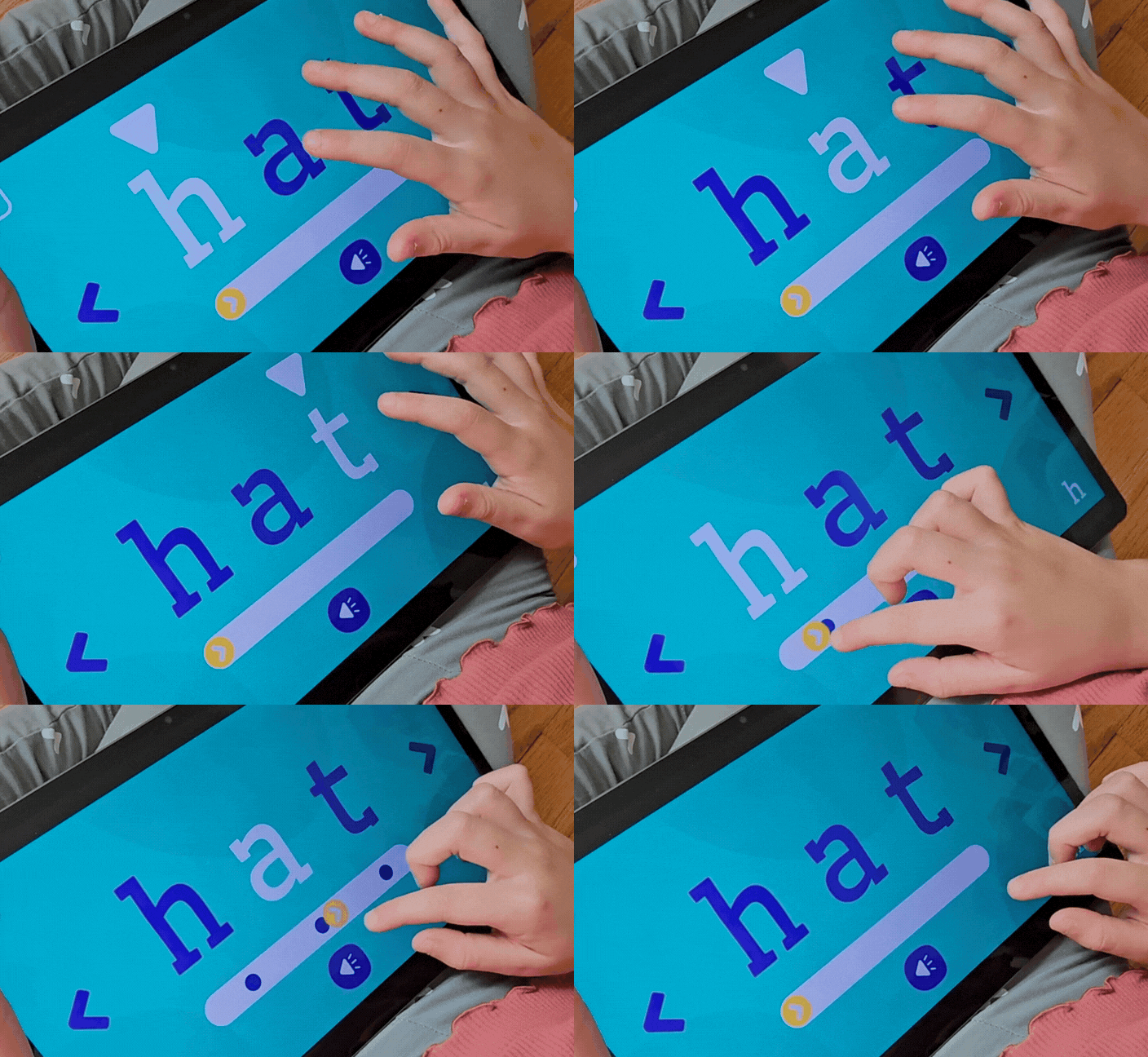
For parents who want support, Phonics Factory at Lotty Learns offers a set of interactive tools that make the process easier. The Phonics Trainer gives parents and children over 900 real decodable words to practice with together, starting with those exact same simple two letter combinations before moving on to bigger words.
Children can tap each letter in a word to hear its individual sound, confirming they know it before attempting to blend. Then the blending slider moves across the word from left to right, lighting up each letter as a visual cue for when to say that sound. The child does the sounding out. The tool makes the process clear and visible. Start the slider slowly, then move it faster and faster until the sounds flow together into the word.
Everything is browser based with no download required. A parent sits alongside, models the process, and guides the session. Ten minutes a day is all it takes.
Starting early is only valuable if you keep going. The parents who show up consistently and sit with their child are the ones who see real progress. Phonics Factory supports that process but works best when a parent is present and engaged.
The Parent Is the Most Important Ingredient
No tool replaces a present parent who models and guides. A child who learns alongside an engaged parent builds not just reading skills but confidence, curiosity, and a positive relationship with learning that will carry them through school and beyond.
You do not need to be a teacher. You do not need to know everything about phonics before you start. You just need to be there. Point to the letters. Say the sounds. Blend them slowly. Celebrate when something clicks. Come back tomorrow.
That is the whole thing. And it is completely within reach for any parent who decides to start.
Frequently Asked Questions
What age should I start building reading foundations with my child?
You can begin introducing letter sounds as early as age two. At this stage it does not need to look like a lesson. It can be as simple as pointing to a letter on a cereal box and saying its sound, or playing a sound game in the car. The earlier the exposure, the more time the child has to absorb the connection between letters and sounds before formal reading instruction begins.
My child does not know the alphabet yet. Should I wait?
No. Letter names and letter sounds are different things. A child does not need to know the alphabet song before learning what sounds letters make. In fact starting with sounds is often more practical because sounds are what actually power reading. You can work on letter names and letter sounds at the same time without any conflict.
How much time do I need to spend on this each day?
Ten minutes is genuinely enough, especially for young children. A focused ten minute session where a child is actively engaged with letters and sounds is more valuable than a long distracted one. Consistency matters more than duration. Ten minutes done regularly will produce results that an hour done occasionally will not.
What if my child is not interested or keeps getting distracted?
Keep it playful and stop before they get frustrated. With very young children the goal is exposure and positive association, not mastery. A child who ends a session feeling good about it will come back willingly. A child who ends frustrated will resist. Follow their energy and keep sessions short enough that they always end on a positive note.
Do I need to buy anything or download anything to get started?
You do not need anything to start today. A piece of paper, a pencil, and a willingness to sit with your child is genuinely enough. Write a simple word, point to each letter, say its sound, and blend slowly. That is the core practice. If you want interactive tools and a large bank of decodable words to practice with, Phonics Factory at Lotty Learns is browser based with no download required.
My child starts kindergarten soon. Is it too late to start?
It is not too late. Even a few weeks of consistent letter sound practice before school starts can make a real difference in how familiar and manageable the early weeks feel for a child. Any exposure is better than none. Start now, keep it positive, and the foundation you build before that first day of school will give your child a meaningful advantage.
What if I am not confident enough to teach phonics?
You do not need to be confident about phonics to start. You just need to know that letters make sounds and that those sounds can be blended into words. That is the whole concept. Point to a letter, say its sound, slide the sounds together. Any parent can do this. The tools inside Phonics Factory make it even simpler by providing the sounds and the visual blending process so you are never guessing about what to do next.