

If you have been putting off starting reading practice because you feel like you do not have enough time, or because your child is too young, or because you are not sure where to begin, this article is for you.
The truth is simpler than most parents expect. Ten focused minutes a day is genuinely enough to build real reading progress in a young child. Not ten minutes of a child sitting alone with a screen. Ten minutes of a parent sitting beside their child, working through letters and sounds together. That is the whole habit. And it works.
Here is exactly how to do it, why it works, and why starting earlier than you think is one of the best things you can do for your child.
You Do Not Have to Wait
Many parents assume they need to wait until their child knows the alphabet, or reaches a certain age, or starts school before beginning any kind of reading practice. This assumption costs children months of valuable early exposure.
A parent can start exposing a child to letter sounds as early as age two. At this stage it is not a structured lesson. It is a game. It is pointing to the big letter M on a cereal box, making a humming sound, and saying "that letter says mmm, like the beginning of moon." It is noticing the letter on a road sign and saying its sound out loud. It is playful, low pressure, and entirely appropriate for a young child's brain and attention span.
A two year old who hears a parent connecting letters to sounds regularly is beginning to absorb something real even if they cannot do it themselves yet. The connection between symbols and sounds is forming. The habit of noticing letters is forming. The understanding that letters mean something is forming. None of that is wasted. All of it becomes the foundation that real phonics practice builds on later.
Starting early is not pressure. It is a gift.
Letter Sounds Matter More Than Letter Names
Most parents start with the alphabet song. It is familiar, it is fun, and it teaches children the names of every letter. But knowing that a letter is called "aitch" does not help a child read the word hat. Knowing that it makes a quiet breath sound, like the beginning of the word hat or hand, does.
Letter names and letter sounds are two completely different pieces of knowledge. Names are what we call the letters. Sounds are what the letters actually do when you read. Decoding, the ability to look at a word and sound it out, runs entirely on sounds. A child who knows every letter name but not the sounds those letters make cannot decode a single word.
This does not mean the alphabet song is harmful. It just means that letter sounds deserve equal attention, and most parents never think to teach them separately. A child does not need to know the alphabet song before starting phonics practice. You can begin with sounds from day one without worrying about whether the child knows letter names yet.
Start with the sounds. The names will follow naturally.

The Simple Progression That Actually Works
One of the reasons parents feel overwhelmed by phonics is that they do not know where to start or what order to follow. Here is a clear, simple sequence that works for young children.
Step one: Individual letter sounds. Before a child can blend anything, they need to know what sound each letter makes. Spend real time here. Do not rush past it. Point to a letter, say its sound clearly, and have your child repeat it back to you. Do this with a handful of letters at a time until they are confident. This is the foundation everything else rests on.
Step two: Two letter words. This is a step most parents and programs skip entirely, but it is one of the most valuable confidence builders in early reading. Simple two letter combinations like AT, IT, UP, ON, and IN are the gentlest possible introduction to blending. There are only two sounds to slide together. The concept is easy to grasp. And when a child successfully blends AT on their very first try, they feel capable. That feeling of capability is what keeps them coming back tomorrow.
Step three: Simple three letter words. Words like CAT, HIT, CUP, BUS, and RUN. Now there are three sounds to blend, but because your child already understands blending from the two letter practice, this feels like a natural next step rather than a big leap. The concept is the same. The word is just a little longer.
From here the complexity grows gradually. Longer words, pairs of letters that make one sound like CH and SH, words where a silent letter changes the vowel sound like CAPE and HOPE, and words with R-controlled vowels, where the letter R changes the sound of the vowel before it, like CAR, BIRD, and CORN. But the foundation is always the same: know the sounds, then blend them.
Follow your child's readiness. Some steps will take days. Others will take weeks. There is no schedule to keep. The only rule is to make it consistent and keep it positive.
One more thing worth knowing: phonics practice does not always require paper or a screen. Before children can connect sounds to letters they can practice hearing sounds in spoken language. Play simple letter sound games throughout the day. In the car, try saying "I spy something that starts with the sound mmm." At lunch, ask your child what sound the word "bus" starts with. These small moments build phonemic awareness, the ability to hear individual sounds inside words, which is the foundation that letter sounds and blending are built on. It costs nothing and it can happen anywhere.
Why 10 Minutes Is Genuinely Enough
Young children have short attention spans. That is not a flaw. It is how their brains are built. A focused ten minute session where a child is actively engaged with sounds and words is more productive than a distracted thirty minute session where their attention has drifted.
What builds readers is not the length of any single session. It is the consistency of practice over time. A parent who does ten minutes every day will see more progress than one who does an hour once a week. The daily repetition is what moves something from unfamiliar to familiar to automatic. That is how any skill is built, and reading is no different.
Ten minutes is also an amount of time that is genuinely achievable for a busy parent. It does not require clearing your schedule. It does not require preparation. It just requires sitting down with your child and doing it. The barrier is low enough that a parent can actually maintain it, which means the habit actually sticks.
What Those 10 Minutes Should Actually Look Like
Sit beside your child, not across from them. Being physically close and on the same side makes the session feel collaborative rather than instructional. You are doing this together, not testing them.
Work through a few words or sounds at whatever level your child is at. If they are just starting, point to a letter and say its sound. If they are blending, write a simple word on paper and demonstrate sounding it out slowly before asking them to try.
Model the process yourself first. Every time. Let your child watch you point to each letter and say its sound before you ask them to do anything. A child who has watched a parent do something ten times has a much clearer picture of what they are trying to do when it is their turn.
Keep the energy positive throughout. Celebrate every small win, no matter how small. When your child gets a sound right that they struggled with yesterday, tell them you noticed. When they blend a word for the first time, make it a moment. These small celebrations are not empty praise. They are the signal that keeps a child motivated to try again tomorrow.
If a session is not going well, stop. Close the book, put down the paper, and try again tomorrow. Pressure and frustration work against reading progress. A child who ends a session feeling stuck will resist the next one. A child who ends feeling capable will ask for it.
How to Build It Into Your Daily Routine
The simplest way to make a habit stick is to attach it to something that already happens every day. After dinner. Before bath time. After the school pickup. In the ten minutes before a show they like to watch. Pick a time that works for your family and protect it.
Consistency is the whole game. Ten minutes done every day produces a very different result from ten minutes done twice a month. The daily practice is what makes letter sounds automatic, what makes blending feel natural, and what eventually makes reading feel effortless. None of that happens without showing up regularly.
You do not need to be perfectly consistent. Missing a day does not undo progress. But missing most days does. Aim for daily, accept occasional gaps, and keep going.
The Parent's Role Is the Most Important Part
Ten minutes with a present, engaged parent is completely different from ten minutes of a child sitting alone with a screen. The difference is not subtle. It is the difference between a child who is absorbing something passively and a child who is being guided through an active skill-building process.
When you are in the room you model the process. You catch the moments when your child guesses instead of sounding out. You slow them down when they rush. You celebrate when something clicks. You redirect when the habit of guessing creeps back in. None of that happens when a child is alone with a device.
Parents who sign up for a reading tool and do not see results are usually the ones who are not showing up consistently, or who are handing the tool to their child and walking away. Ten minutes a day with a present parent done every day produces readers. Ten minutes done twice a month does not. The habit is the whole thing.
You are the most important variable in this equation. Not the tool. Not the program. You.
Where Phonics Factory Fits Into the Habit
Phonics Factory at Lotty Learns is built around exactly the progression described in this article. You do not need to invent your own word lists or figure out what comes next. The tools do that for you.
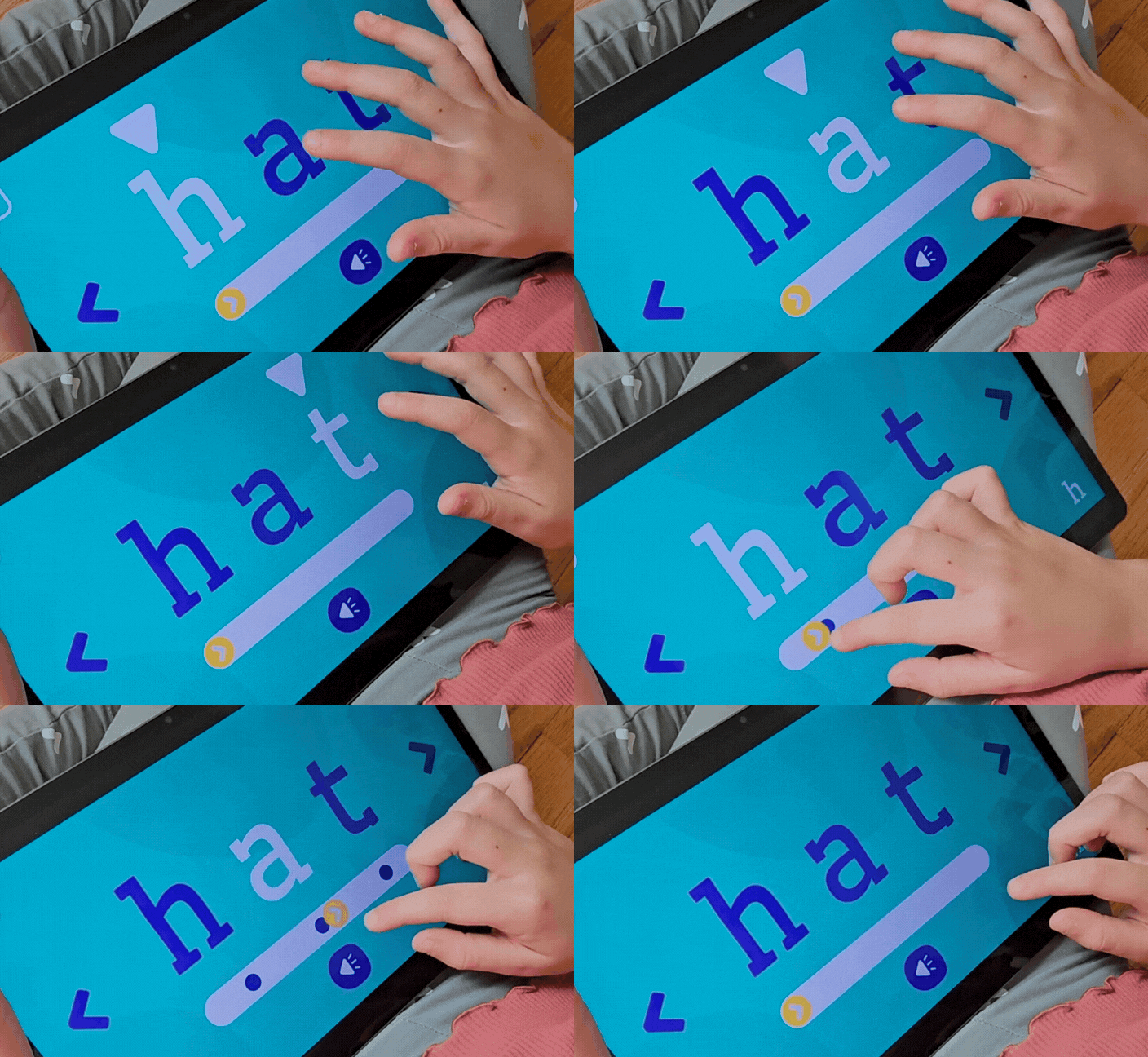
The Phonics Trainer takes children through real decodable words, from simple two letter combinations and three letter words all the way through to pairs of letters that make one sound, silent letter words, and R-controlled vowel words. Your child taps each letter in a word to hear its sound, then uses the blending slider to practice putting those sounds together. Each letter lights up as the slider moves across the word, cueing when to say each sound. Start slow, then faster, until the word clicks. With over 900 real decodable words there is always something new to work through.
A parent sits alongside, guides the session, and keeps it moving. Ten minutes flies by.
The Habit Is the Gift
A child who has had a daily habit of playful word and sound exposure since age two arrives at kindergarten already ahead. Not because they have been drilled or pressured. Because a parent showed up consistently, made the process feel safe and positive, and gave them the tools to understand how reading works before school ever started.
That is not a small thing. That is one of the most meaningful things a parent can do in the early years. And it takes ten minutes a day.
You do not need to be a teacher. You do not need to clear your schedule. You just need to sit beside your child, say the sounds clearly, model the blending, celebrate the wins, and show up again tomorrow.
That is the habit. And it works.

Frequently Asked Questions
Is age two really not too young to start exploring letter sounds?
Two is not too young to start exploring letter sounds, as long as it is kept playful and low pressure. At this age it is not a structured lesson. It is pointing to a letter on a cereal box and saying its sound. It is noticing a letter on a road sign and making the sound out loud. It is letter sound games in the car. You are not expecting a two year old to sit still and decode words. You are introducing the idea that letters make sounds, in a way that fits naturally into everyday life. Many children this age are genuinely curious about letters. Meeting that curiosity with playful sound exploration is never too early.
Does my child need to know the alphabet before we start?
No. Letter names and letter sounds are different things. A child does not need to know the alphabet song before learning what sounds letters make. In fact, starting with sounds is often more useful because sounds are what actually power reading. Letter names can be learned alongside sounds or after. The alphabet song is not a prerequisite for phonics practice.
Why do you recommend starting with two letter words before three letter words?
Because blending two sounds is significantly easier than blending three. Simple two letter combinations like AT and IT give a child their first successful blending experience without overwhelming them. That first success builds confidence. And confidence is what keeps a child engaged and willing to try harder words next. Skipping straight to three letter words often makes blending feel harder than it needs to be at the start.
What if my child loses interest after a few minutes?
Stop and try again tomorrow. A short positive session is always better than a long frustrated one. As you do this consistently your child will build more tolerance for the practice and the sessions will naturally extend. In the beginning five minutes of genuine engagement is worth more than ten minutes of a disengaged child being pushed through material they are not ready to absorb.
How do I know if my child is making progress?
Watch for specific changes over time. Is your child recognizing more letter sounds without prompting? Are they attempting to blend sounds rather than guessing? Are they starting to sound out words they encounter in everyday life, on cereal boxes, road signs, or books? These are the real signs of progress. They are not always visible after one week but they become clear over months of consistent practice.
Can I use Phonics Factory even if my child is very young, like two or three?
Yes. Phonics Factory includes simple two letter word patterns that are a gentle starting point for very young children. For a two or three year old, even a few minutes of sitting with a parent and tapping letters to hear their sounds is meaningful early exposure. You do not need to push into full word blending until your child is ready. Start with whatever level feels comfortable and follow your child's pace.
What if we miss days here and there?
Missing a day does not undo progress. What matters is the overall pattern of consistency over time. A child who practices most days each week will make steady progress. A child who practices a couple of times a month will not see the same results. Do not let a missed day become a reason to stop. Pick up where you left off and keep going.