
What Are CVC Words and Why Do They Matter for Children Learning to Read?

If you have heard the term CVC words and were not sure what it meant, you are not alone. It sounds technical but the concept behind it is actually very simple, and once you understand it you will see exactly why these words matter so much for children who are learning to read.
This article explains what CVC words are, where they fit in the reading journey, and how you can use them at home to give your child a real foundation in reading.
What CVC Words Actually Are
CVC stands for consonant-vowel-consonant. But you do not need to remember that. What matters is this: CVC words are simple three-letter words where every single letter does exactly what it is supposed to do. No tricks. No silent letters. No exceptions.
Words like CAT, HIT, BUS, CUP, and DOG are CVC words. Each letter makes one clear sound, and the vowel in the middle always makes its short vowel sound. The vowel in BUS makes a short sound, different from the long sound it makes in a word like FUSE. The vowel in CAT makes a short sound, different from the long sound in CAKE. That consistency is part of what makes CVC words so predictable. Every letter pulls its weight and nothing about the word breaks the rules.
That predictability is exactly what makes CVC words so powerful for a child who is just learning to read. There are no surprises. A child who knows what sound each letter makes can sound out any CVC word they encounter, even a word they have never seen before in their life. That is the whole point.
Why CVC Words Matter So Much
CVC words are the first real test of whether a child can actually decode. And decoding, the ability to look at letters and convert them into sounds, is the core skill that turns a non-reader into a reader.
A child who can sound out CAT is not guessing from a picture on the page. They are not recognizing the word by its shape because they have seen it before. They are applying what they know about letter sounds to read a word from scratch. That is real phonics. And CVC words are where that happens for most children for the very first time.
That first successful blend is a milestone. When a child sounds out CAT on their own, something clicks that did not exist before. They understand that letters make sounds and sounds make words and they can do this themselves. That understanding is the foundation of everything that comes after.
It is worth noting what genuine decoding is not. If a child reads the word DOG because there is a picture of a dog on the page, they are practicing picture guessing, not reading. True phonics means looking at the letters, connecting each one to its sound, and blending those sounds from scratch. That is what CVC practice builds.

Where CVC Words Fit in the Reading Journey
CVC words do not come first. They come after some important groundwork has been laid. Here is the natural order that works best for most children.
Step 1: Individual letter sounds. Before a child can blend anything they need to know what sound each letter makes. Not the letter name. The sound. The letter B is not "bee." It makes a short clipped sound written as /b/ in phonics, meaning just the sound itself with no extra vowel attached to it, like the beginning of the word bus or ball. A child who does not know the sounds cannot blend them. This step cannot be skipped and it cannot be rushed. Spend real time here.
Step 2: Two-letter combinations. Simple pairings like AT, IT, UP, ON, and IN give a child their first experience of blending two sounds together. This is a gentler introduction to the concept than jumping straight to three-letter words. A child who successfully blends AT for the first time feels capable. That feeling matters. It is what keeps them willing to try the next thing.
Step 3: CVC words. Now there are three sounds to blend but the child already understands the blending concept from the two-letter practice. Because CVC words use short vowel sounds and contain no silent letters or rule breakers, they are perfectly predictable. The step up feels manageable and this is where real decoding begins.
Step 4: Gradual complexity. Once CVC words are solid you can move to words with consonant clusters like SLIP or BELT, then pairs of letters that make one sound like CHIP or SHIP, then words where a silent letter changes the vowel sound like CAPE and HOPE, and eventually R-controlled vowels like CAR, BIRD, and CORN. Each step builds on what came before. Get CVC words solid and every next step becomes easier.
How to Practice CVC Words at Home
You do not need a reading program or special materials. A piece of paper and a pencil is genuinely enough to start.
Write a simple CVC word. CAT. HIT. BUS. Point to the first letter and say its sound clearly. Then the second. Then the third. Go from left to right, one sound at a time. One important thing to keep in mind: when you say a consonant sound, keep it short and clipped. Do not add a vowel sound onto the end of it. The letter B makes a quick sound, not "buh." The letter T makes a quick sound, not "tuh." Adding that extra vowel makes blending much harder for a child because the sounds do not flow together cleanly. Short and clipped is the goal. Then go back to the beginning and slide your finger slowly under the word as you blend the sounds together, keeping them connected so they flow into each other rather than staying as three separate chunks. Let the whole word click together at the end.
Do this yourself first. Let your child watch you do it several times before asking them to try. A child who has seen a parent sound out a word multiple times has a much clearer picture of what they are trying to do when it is their turn. Watching a parent model the process is one of the most effective things that can happen in a reading session.
When your child is ready to try, stay right beside them. If they get it right, celebrate it. If they do not, model it again. There is no wrong here. There is just more practice needed. And the more practice they get with CVC words the more natural the blending process becomes until one day it is automatic.
Keep sessions short and end them before frustration sets in. Ten minutes of focused, positive practice is worth more than thirty minutes of a child being pushed through material they are not ready for. A session that ends with a child feeling capable is a session that worked.
CVC Words Take Practice and That Is Normal
A child will not successfully blend CVC words on their first try. Most children need many sessions of modeling and practice before blending clicks. That is not a sign that something is wrong. It is how skill building works.
The children who get CVC words solid are the ones whose parents show up consistently. Short sessions done regularly beat occasional long sessions every time. Ten minutes a day is enough. The daily repetition is what moves a sound from unfamiliar to familiar to automatic. It compounds quietly and then one day your child sounds out a word and it just clicks and you both know something has shifted.
A child who uses a tool occasionally and without a parent present is unlikely to build the skill the same way. The habit of short consistent sessions with a present parent is what turns CVC practice into real reading ability.
The Parent's Role in CVC Practice
CVC words do not teach themselves. A child left alone with a screen will not figure out blending without guidance. The parent who sits alongside, models the process, points to the letters, says the sounds clearly, and keeps the energy positive is the most important part of the equation.
You do not need to be a reading teacher to do this. You need to know what sound each letter makes and you need to be willing to sit beside your child and show them how the sounds come together. That is it. Any parent can do this and the impact of doing it consistently is enormous.
When a child sounds out CAT for the first time and gets it right, celebrate it like the milestone it is. Because it is one. They just read a word. Not guessed it. Not recognized it. Read it. That is worth making a moment of.
Practicing CVC Words With Phonics Factory
For parents who want a tool that makes CVC practice easier and gives them a large bank of words to work through, the Phonics Trainer inside Phonics Factory at Lotty Learns is built around exactly this kind of practice.
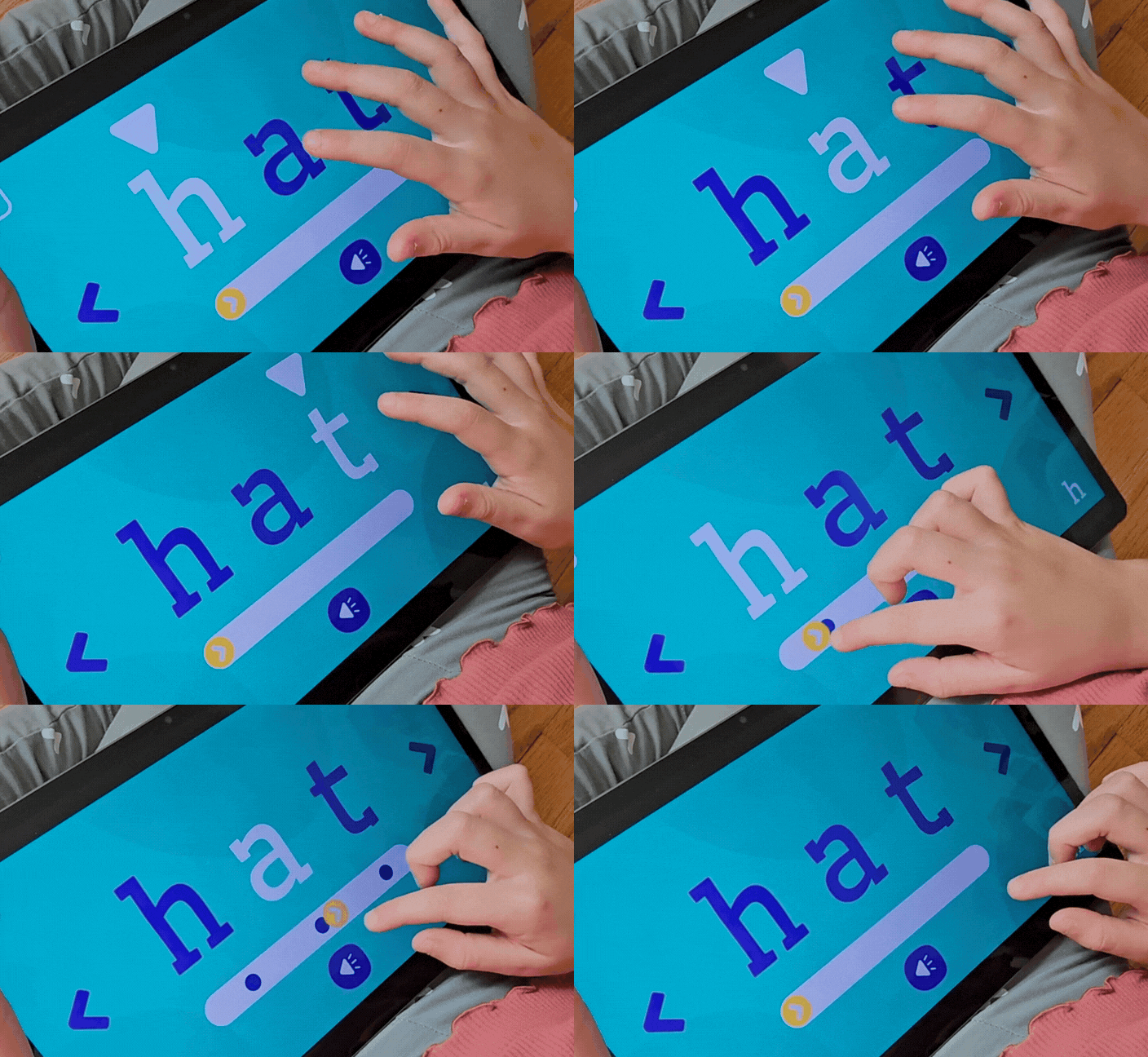
A full word appears on screen. Your child taps each letter to hear its individual sound, confirming they know it before any blending happens. Then the blending slider moves across the word from left to right, lighting up each letter as a visual cue for when to say that sound. The child does the sounding out. The tool makes the process clear and visible. Start the slider slowly, then move it faster and faster until the sounds flow together into the word.
The Phonics Trainer includes hundreds of real CVC words alongside words at every other level of phonics complexity. There is always something new to practice. And because it is designed for a parent and child to use together, you are right there in the process the whole time, modeling, guiding, and celebrating the moments when it clicks.
From CVC Words to Real Reading
CVC words are a beginning, not an endpoint. But they are the most important beginning in early reading because they are where decoding becomes real. A child who can blend CAT can learn to blend CHAT. A child who can blend HIT can learn to blend HIDE. Every next step in reading complexity builds on the foundation that CVC words establish.
The time you spend on CVC words now is not just teaching your child three-letter words. It is teaching them that they can decode. That letters make sounds, sounds make words, and they can do this themselves. That understanding will carry them through every word they encounter for the rest of their reading life.
And it starts with sitting beside your child, writing CAT on a piece of paper, and showing them how three sounds become one word.
Frequently Asked Questions
What does CVC stand for?
CVC stands for consonant-vowel-consonant. But what matters more than the label is what these words actually are: simple three-letter words where every letter makes exactly one clear sound with no exceptions. Words like CAT, HIT, BUS, and CUP. Every letter does its job and nothing about the word breaks the pattern. That predictability is what makes them ideal for children who are just learning to decode.
At what age should a child start practicing CVC words?
CVC words are typically appropriate once a child knows the sounds of most individual letters and has had some experience blending two sounds together. For many children this happens somewhere between ages three and five, though every child develops at their own pace. The important thing is not the age but the readiness. If a child knows their letter sounds and can blend two sounds together, they are ready to try CVC words.
My child knows their letter sounds but cannot blend CVC words yet. What is wrong?
Usually nothing is wrong. Blending is a separate skill from knowing letter sounds, and it takes practice to develop. The most common reason a child struggles to blend CVC words is that they pause too long between sounds, which makes it hard for the brain to hear the word they are forming. Try starting with two-letter combinations like AT and IT first and practice blending those until they feel natural. Then move to CVC words. The concept transfers once the blending reflex is in place.
How many CVC words should my child practice in a session?
Quality matters more than quantity. A short focused session working through three to five words with full attention and correct blending is more valuable than rushing through twenty words. The goal is not to cover ground. It is to build the blending reflex until it becomes automatic. As that happens naturally over time, the number of words a child can work through in a session will increase.
Is it okay if my child memorizes some CVC words by sight?
Some memorization is natural and not a problem in small amounts. The concern is when a child relies on memorization instead of decoding. If your child can read CAT only because they have seen it many times but cannot sound out a CVC word they have never encountered before, that is worth addressing. The goal of CVC practice is to build the decoding skill, not to add words to a memorized list. Keep introducing new CVC words your child has not seen before so they are always practicing the actual skill.
What comes after CVC words?
Once a child can confidently blend CVC words without hesitation the natural next steps are words with consonant clusters at the beginning or end like SLIP or BELT, then words where two letters make one sound like CHIP or SHIP, then words where a silent letter changes the vowel sound like CAPE and HOPE, and eventually R-controlled vowels like CAR, BIRD, and CORN. Each step builds on CVC decoding. Getting CVC words solid first is what makes every next step feel manageable rather than overwhelming.
How is Phonics Factory different from other reading apps when it comes to CVC words?
Most reading apps present CVC words alongside pictures or in game contexts where a child can guess the word from the image rather than decoding it. Phonics Factory presents the word alone on screen with no picture to guess from. Your child taps each letter to hear its sound, then uses the blending slider to practice putting those sounds together. The child does the actual decoding. The tool makes the process visible. And it is designed for a parent to sit alongside and guide the session rather than handing a screen to a child and walking away.