
Why Your Child Can Beat Every Reading App Level but Still Can't Read

Your child loves their reading app. They ask for it by name. They race through the levels, collect the badges, and light up when the little animation plays. By every measure the app gives you, they are doing great.
So why, when you show them that same word on a piece of paper, do they look at you blankly?
You are not imagining it. And you did not do anything wrong. But what is happening here is worth understanding, because it is more common than most parents realize.
What Gamified Reading Apps Are Actually Teaching
Many reading apps are built around one core goal: keeping children engaged long enough to come back tomorrow. That is what they are optimized for. Engagement. Retention. Time on screen.
And they are genuinely good at it.
What they are not built around is the actual mechanics of how children learn to read. Teaching a child to decode words is slow, repetitive, and quiet. It does not make for a compelling app store listing.
So these apps do what they are designed to do. They teach children to be good at the game. The problem is that being good at the game and learning to read are two completely different things.
Inside a gamified reading app, a child learns to:
Recognize which button to tap based on context clues and position on screen.
Use pictures to guess what a word says.
Memorize sequences after enough repetition.
Respond to the reward cue, not the reading task itself.
None of those skills transfer to a page. A page has no sound effect when you get something right. There are no stars to collect. There is just a word and the need to figure it out from the letters themselves.
The ability to look at a word and work through it from its letters is what reading actually is. That skill has to be built directly, through repeated and focused practice with the sounds letters make and how those sounds blend together into words.
Passing App Levels Is Not the Same as Learning to Read
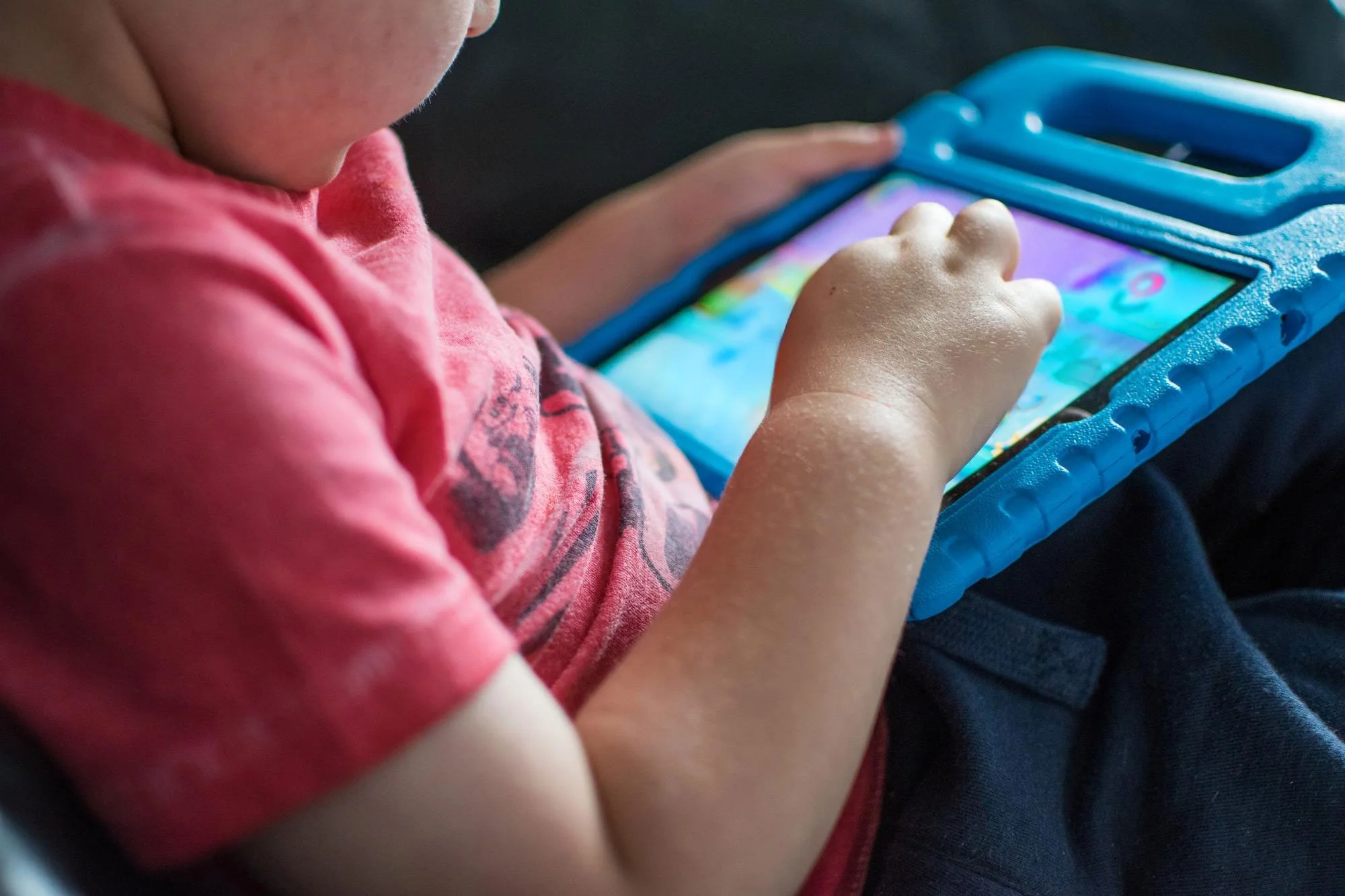
Here is something worth trying. Find a word your child has worked with in their reading app. Write it on a piece of paper. Cover any pictures. Ask them to read it.
If they hesitate, guess, or look to you for a clue, they may not actually be reading the word. They may have learned to recognize it inside the game, where surrounding context and repetition do the heavy lifting, without ever working through the letters themselves.
This is not a reflection on your child. Children are smart, and they figure out how to succeed at whatever system they are given. If the system rewards guessing based on pictures, they will guess based on pictures. If it rewards memorizing a pattern, they will memorize the pattern. That is not reading. That is problem solving the game.
Real reading starts with sounds. Each letter, or combination of letters, makes a specific sound. A child who knows those isolated sounds and can blend them together in sequence can work through a word they have never seen before. That is decoding. And decoding is a skill that only develops through direct, repeated practice. It does not come along for free when a child earns a badge.
How High-Stimulation Design Affects a Child's Ability to Focus
There is a longer-term issue worth naming here as well.
Apps built for engagement use high-stimulation design deliberately. Flashing animations. Sound effects. Countdown timers. Constant novelty and reward. These choices are effective at holding a child's attention in the short term.
But over time, they also train a child's brain to expect that level of input in order to stay focused.
Then we hand them a book. A book is quiet and still. It asks a child to sit with one word at a time and work through it without any external reward. A child whose attention has been shaped by high-stimulation input can find that genuinely difficult, not because something is wrong with them, but because they have been trained for a different kind of experience.
We tend to call that a focus problem or reading resistance. Often it is neither. It is a predictable outcome of the environment a child has been learning in.
Building real reading ability means building the kind of calm, sustained focus that reading actually requires. A child who learns in a low-stimulation environment is being prepared for what books actually are.
That thinking is at the core of Phonics Factory, a browser-based set of interactive phonics tools for children ages 2 to 8, designed to be used by a parent and child together. The tools are intentionally simple and calm. No animations celebrating a correct answer. No reward sequences after each word. The focus stays entirely on the word in front of the child and the sounds it is made of. That is a deliberate choice, not a design limitation.
Try Phonics Factory free for 7 days at lottylearns.com
Why Parent Involvement Is the Missing Piece

One reason reading apps feel like they are working is that your child is occupied and happy. You handed them the tablet, walked away, and twenty minutes later they are still at it. That looks productive.
But a child engaged with a game is not the same as a child engaged with the work of reading.
When a parent sits alongside a child and works through real words together, something happens that no app can replicate. The child gets feedback at the exact moment they are uncertain. The parent notices when they are guessing instead of sounding out. The child feels supported through the hard parts, not just bounced off a wrong-answer sound effect and left to try again on their own.
That presence matters. It is not a bonus on top of the real work. In many ways it is the real work. Apps are built to run without you. That is a selling point for the app. For the child learning to read, it is a meaningful gap.
What Real Phonics Practice Looks Like
Real phonics practice does not require a teaching background or special materials. What it requires is focused, repeated exposure to the sounds letters make and practice putting those sounds together into words, with a parent present.
For younger children, that might look like simply tapping a letter and hearing its sound. A two-year-old who taps the letter S on a screen and hears its sound is making a genuine connection between a printed symbol and what it represents. That early familiarity matters. It is the beginning of something, not a placeholder until real learning starts.
For older children, it means practicing the full process of decoding: working through each sound in a word and blending them together until the word clicks.
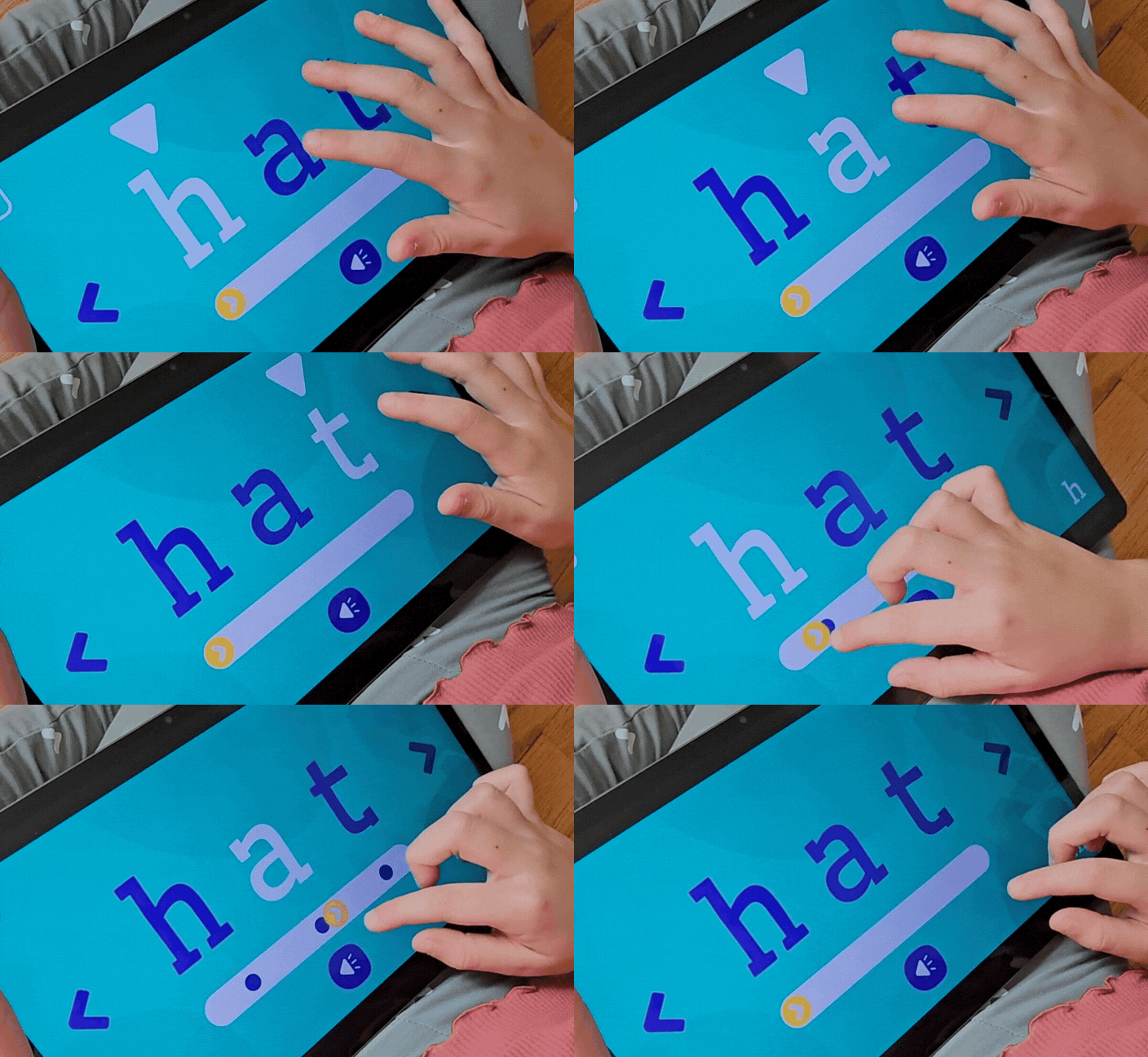
The Phonics Trainer inside Phonics Factory is built around exactly that process. A real decodable word appears on screen. The child taps each individual letter to hear its isolated sound. Then a blending slider moves across the word from left to right, lighting up each letter as a cue for when to say that sound out loud. The child does the sounding out. The slider just shows them where they are in the word.
There are no levels to beat. No badge for finishing. No animation when they get it right. Just a child learning what a word sounds like from the inside out, with a parent right there to help when they get stuck. Over 900 real decodable words are included, and a child can work through them at whatever pace makes sense for where they are.
Try Phonics Factory free for 7 days at lottylearns.com
Frequently Asked Questions
My child knows all their letters. Why can't they read yet?
Knowing letter names is different from knowing isolated letter sounds. Reading requires knowing the precise sound each letter makes, not its name, and being able to blend those sounds together in sequence. A child can recite the alphabet perfectly and still not have the tools to work through a word on their own. Isolated letter sounds are the actual foundation of reading, and building that foundation takes time and consistent practice.
We have been using a reading app for a year. Did we waste that time?
No. Time spent engaged with letters and reading is not wasted. Learning to read takes time regardless of the tools you use. But if you are noticing that your child can complete words inside the app and then cannot read those same words on a page, that gap is worth paying attention to. It often means they learned to navigate the game rather than decode the word itself.
How much time do we actually need to spend on this?
Short and focused beats long and scattered. Ten to fifteen minutes of real phonics practice with a parent present is more valuable than an hour of unsupervised app time. Every child develops at their own pace, and consistency over time matters far more than any single session. It does not have to take over your day.
My child gets frustrated when they cannot figure out a word. What do I do?
That frustration is normal and honestly a good sign. It means they know there is a right answer and they want to find it. Slow down. Go back to the individual letter sounds. Let them hear each one before trying to blend. The goal is not speed. The goal is that the word eventually clicks, even if it takes a few tries to get there.
The Bottom Line
If your child is flying through app levels but cannot read that same word on a page, now you know why. The app is doing exactly what it was built to do. What it was not built to do is teach your child to decode words on their own, outside the context of the game.
That skill is built through focused phonics practice, with real words, with a parent right there, over time.
That is what Phonics Factory is built for.