
How to Practice Phonics With Your Child in 10 Minutes a Day

You want to help your child learn to read. You know it matters. But every time you think about actually sitting down to do it, you hit the same wall: you are not sure what you are supposed to do, and you assume it has to take a long time to be worth doing.
So it does not happen. Not because you do not care. Because the task feels bigger and more complicated than it actually is.
Here is the good news. Ten focused minutes a day, done consistently, accomplishes more than an hour-long session done once a week. You do not need a teaching background. You do not need a curriculum. You need a few minutes, a few real words, and a willingness to sit next to your child while they work through them.
What Phonics Practice Actually Means
Before we get into what a session looks like, it helps to know what you are actually doing.
Phonics practice means helping your child connect letters to the sounds they make, and then guiding them to blend those sounds together to read real words. That is the whole idea. A child hears the sound a letter makes, then learns to string a few of those sounds together until they form a word they can say out loud.
There are no worksheets required. No lecture to deliver. You do not need to plan out a sequence yourself, you just need to use words that match what your child already knows. You are simply giving your child small, repeated chances to practice the skill that reading is actually built on: looking at letters and turning them into sounds, then turning those sounds into words.
What a 10 Minute Session Actually Looks Like
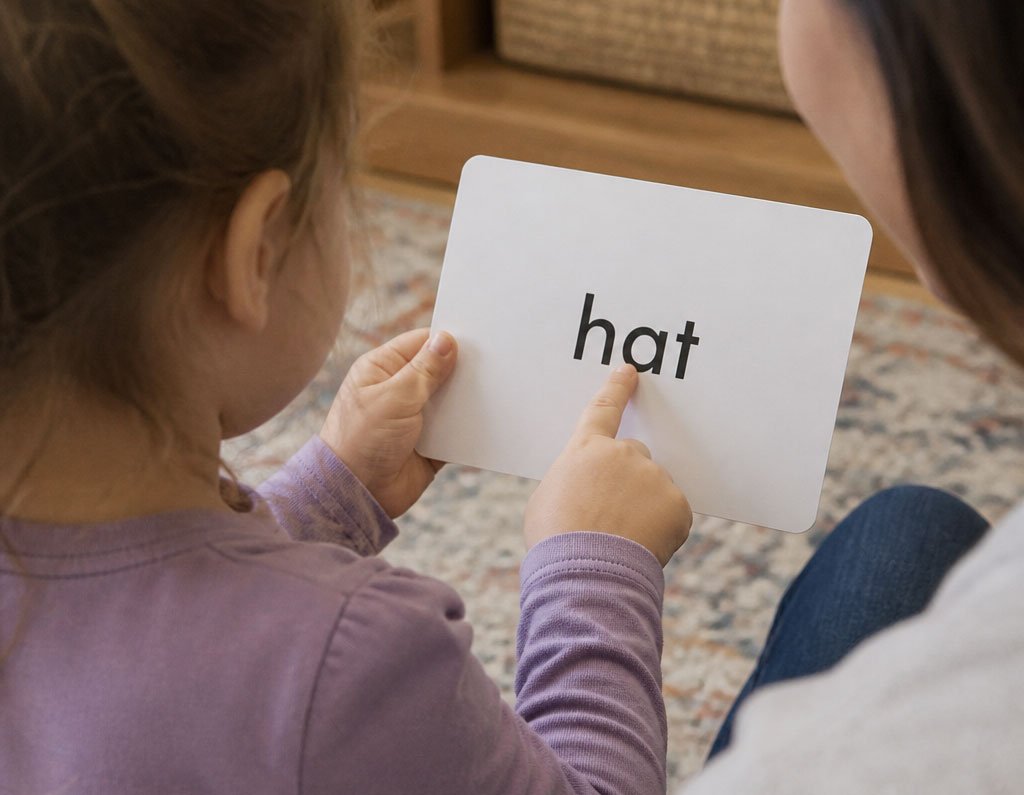
Here is a simple way to break down those ten minutes. None of this needs to be exact. Think of it as a guide, not a script.
A minute or two of warm up. Start with a few letter sounds your child already knows. Point to a letter, have them say the sound. This is not a test. It is just a way to ease in and build a little momentum before moving to full words.
Several minutes working through real words together. Pick a handful of simple decodable words, the kind where every letter makes one clear sound with no tricky spelling patterns involved. Have your child sound out each letter, then help them blend the sounds together. If they get stuck, slow down. Repeat the sound. Let them try again. This is the heart of the session.
A closing minute on what clicked. End by going back to one or two words that came together well during the session. Let your child read them again. Ending on something that worked is a small thing, but it matters. It is the last impression they walk away with.
That is it. No special materials. No grading. Just real, repeated interaction with real words.
Why Your Presence Makes the Difference
It is worth being direct about something here: you sitting next to your child while they sound out a word is not a nice extra. It is the thing that makes this work.
When your child says a sound out loud and you are right there to confirm it, gently correct it, or slow things down when they are struggling, that back and forth is what builds the skill. A child who hears a sound, tries it, and gets a response in real time is learning in a way that nothing else replicates. Not a worksheet sitting alone on a table. Not an app running without you in the room.
You do not need to know phonics terminology or have any kind of teaching background to do this well. You need to be present, patient, and willing to slow down when your child needs you to.
Some Days Will Feel Like Progress. Some Won't.
It is worth setting expectations honestly here. Some sessions will feel great. Your child will sound out a word that has been giving them trouble for days, and it will click right in front of you. Other sessions will feel slow, or frustrating, or like nothing happened at all.
Both kinds of days are normal. Reading development does not happen in a straight line, and it does not happen in any single session. What actually produces results is showing up consistently, day after day, even on the days that feel unremarkable. Ten quiet minutes today is not really about today. It is about the tenth, the thirtieth, the hundredth time your child sits down and does this work with you.
Where Phonics Factory Fits Into This
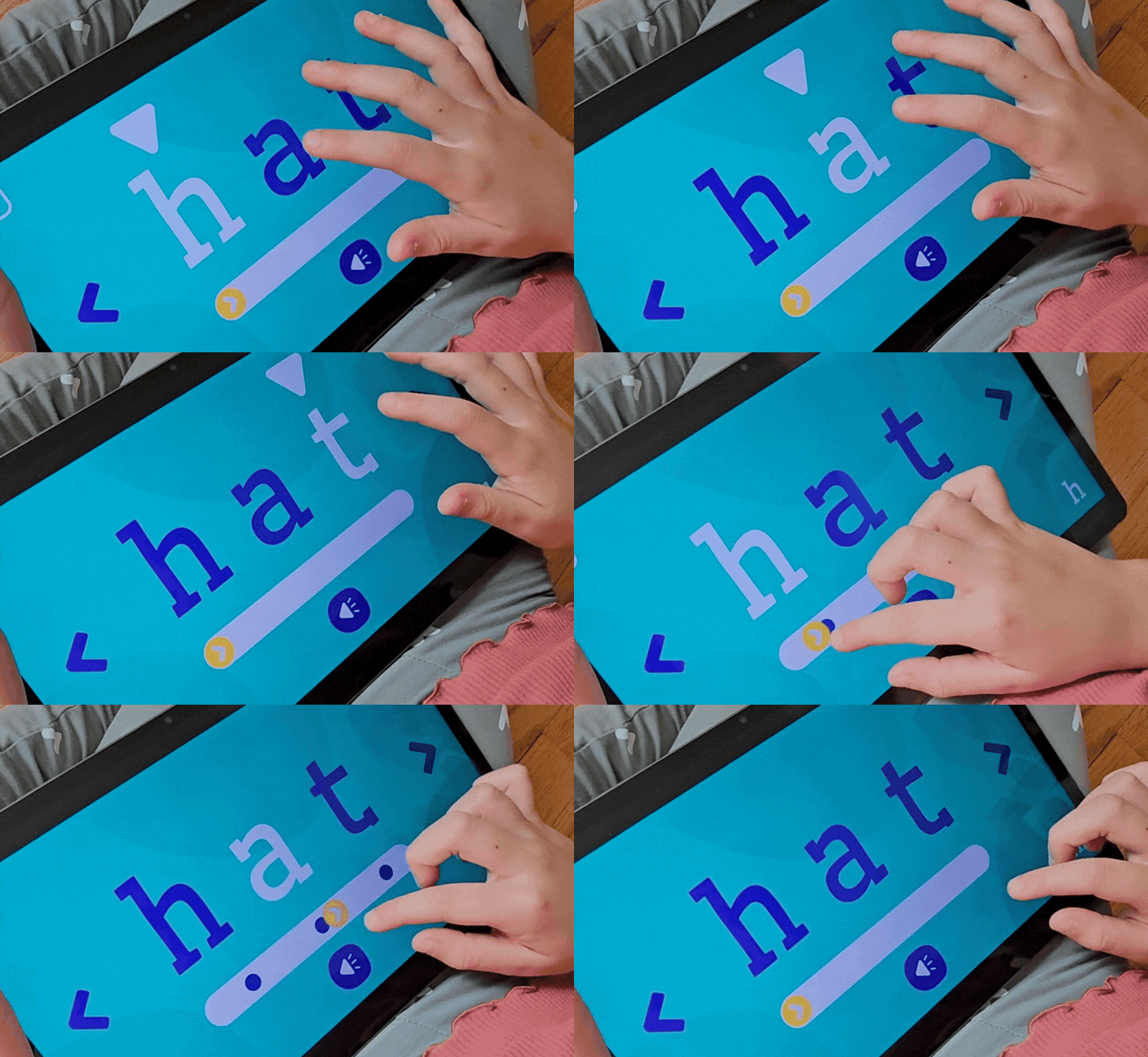
This is exactly the kind of short, repeatable practice that Phonics Factory is built around. It is a sandbox of browser-based phonics tools for children ages 2 to 8, designed to be used by a parent and child together in exactly the kind of short daily window we have been describing.
The Phonics Trainer is the core tool inside it. A real decodable word appears on screen. Your child taps each letter to hear its sound, then a blending slider moves across the word from left to right, lighting up each letter as a cue for when to say that sound out loud. Your child does the actual sounding out. You are right there next to them the whole time.
There is no complex lesson plan for you to prepare. You sit down, pick a word that matches where your child currently is, and practice. Some days that might be three words. Some days it might be ten. Either way, it fits naturally into a ten minute window without needing anything extra from you.
Try Phonics Factory free for 7 days at lottylearns.com
Frequently Asked Questions
What if I only have time some days and not others?
Some practice is always better than none, and missing a day here and there will not undo progress. What matters most over time is general consistency, not a perfect streak. If you can find ten minutes most days, that is enough to see real growth.
My child loses focus after a few minutes. Is 10 minutes too long?
Not at all, and it is fine to break it into smaller pieces if needed. A few minutes in the morning and a few minutes before bed can work just as well as one ten minute block. The total time matters more than it happening all at once.
Do I need to know phonics rules to help my child?
No. You do not need to know technical terms or rules to sit with your child while they sound out a word. What helps most is patience, consistency, and a willingness to slow down and repeat a sound when they need it.
How do I know if we are making progress?
Look for small signs over time rather than expecting dramatic shifts week to week. A child sounding out a word a little faster than they did last month, or recognizing a pattern they have practiced before, are both real signs of progress, even if they seem small in the moment.
The Bottom Line
You do not need a long session, a curriculum, or a teaching background to help your child build real reading skills. You need ten consistent minutes, a few real words, and a willingness to sit beside them while they do the work of sounding it out.
That is what daily phonics practice actually looks like. And it is exactly what Phonics Factory was built to support.