
How Phonics Games Can Help Your Child Learn to Read

How do you get a young child excited about reading? For many parents the answer is games. And honestly, that instinct is right. Physical phonics games and hands-on activities are one of the best ways to build early reading awareness in young children. They make letters and sounds feel approachable, fun, and low pressure.
In this article we will cover the physical games that genuinely help, explain how those games translate into real reading skills, ask whether learning apps and gamified tools are worth it, and show you what real reading practice actually looks like.
Phonics Games to Play With Your Child
Most of these games use simple supplies you probably already have at home- paper, chalk, and a marker are all you need to get started. A few of the later games work best with letter tiles or a Jenga set if you have them.
1. Say It Back
Hold up a simple object or picture and say its first sound out loud. Ask your child to say it back to you. A ball becomes "/b/". A cup becomes "/k/". Keep it short, keep it playful, and celebrate every attempt. At this age the goal is simply getting them comfortable hearing and repeating individual sounds.
Ages 2 and up
2. Sound Race
Write 10 letters on small pieces of paper and spread them on the floor. Call out a sound and your child races to find the right letter and stomp on it before you count to five. Take turns being the caller. First one to stomp five correct letters wins.
Ages 3 and up
3. Letter Sound Hopscotch
Draw a hopscotch grid with chalk and write a letter in each square. As your child hops through the grid they have to say the sound of each letter they land on. Miss a sound and they go back to the start. You can swap letters out each round to keep it fresh.
Ages 3 and up
4. Sound Spy
A twist on I Spy. Instead of "I spy something beginning with the letter B" say "I spy something beginning with the sound /b/." This small change shifts the focus from letter names to letter sounds, which is exactly what phonics is built on.
Ages 3 and up
5. Word Building Showdown
Give each player a set of letter magnets or letter tiles. Call out a simple word and race to build it first. The first player to hold up the correct word gets a point. Play to five points. For younger children you can slow it down and take turns instead of racing.
Ages 4 and up
6. Flip and Read
Write simple three letter words on index cards and cut each card into three pieces, one letter per piece. Shuffle the pieces into three piles. Players flip one card from each pile to make a word and try to read it out loud. Some words will be nonsense words which makes it even more fun. The player who reads the most words correctly wins.
Ages 5 and up
7. Phonics Jenga
Grab a Jenga set and write a letter on each block with a marker. Players take turns pulling a block and saying the sound that letter makes before removing it from the tower. Then before stacking it back on top they have to say a word that contains that sound. Get either one wrong and you lose your turn. Knock the tower over and the game starts over. It is a simple twist on a game most families already own that turns every pull into a phonics moment.
Ages 5 and up
How These Games Actually Help Your Child Learn to Read
It might feel like you are just playing, but each of these games is building something real. Here is what is happening underneath the fun.
Every time your child hears a sound and connects it to a letter they are strengthening phonemic awareness, the ability to hear, identify, and manipulate individual sounds in words. This is the single most important skill a child needs before they can learn to read. Without it, words are just shapes on a page.
When your child races to build a word with letter tiles or hops through a hopscotch grid saying letter sounds, they are also building something called automaticity, the ability to recognize letter sounds instantly without having to think about it. The faster and more automatically a child can connect letters to sounds, the more mental energy they have left over for the harder work of blending those sounds into words and understanding what they mean.
These games also keep the experience low pressure and playful, which matters more than most parents realize. A child who associates letters and sounds with fun and success is a child who is ready to sit down and do the harder work of actual reading. You are not just teaching phonics. You are building a relationship between your child and the act of learning.
Can Kids Learn to Read With Learning Apps?
Yes, it is possible. There are digital tools that genuinely support early reading, and used the right way they can be a valuable part of a child's learning. But not all learning apps are created equal, and the difference matters more than most parents realize.
The problem with most reading apps is that they are built to be entertaining first. Flashing animations, reward systems, and dopamine hits are deliberately engineered to hold a child's attention. And they work. Kids will sit with these apps for a long time. But over time a child's brain starts to expect that level of stimulation. When you then sit down for quiet focused practice, or hand them a book, it feels slow and boring by comparison. Not because it is, but because the app has reset what engagement feels like for them.
Real reading is quiet and focused. It requires slowing down, looking at each letter, connecting it to a sound, and blending. A child conditioned to expect constant rewards and stimulation will struggle to sit with that kind of practice. Many parents spend months on popular reading apps only to find their child still cannot sound out an unfamiliar word. That is because the app was keeping them entertained, not teaching them to decode.
Sometimes learning feels more like work than play. A parent who is willing to sit with their child and guide them through something that is not flashy or immediately entertaining is the parent who will see real results.
What Real Reading Practice Looks Like
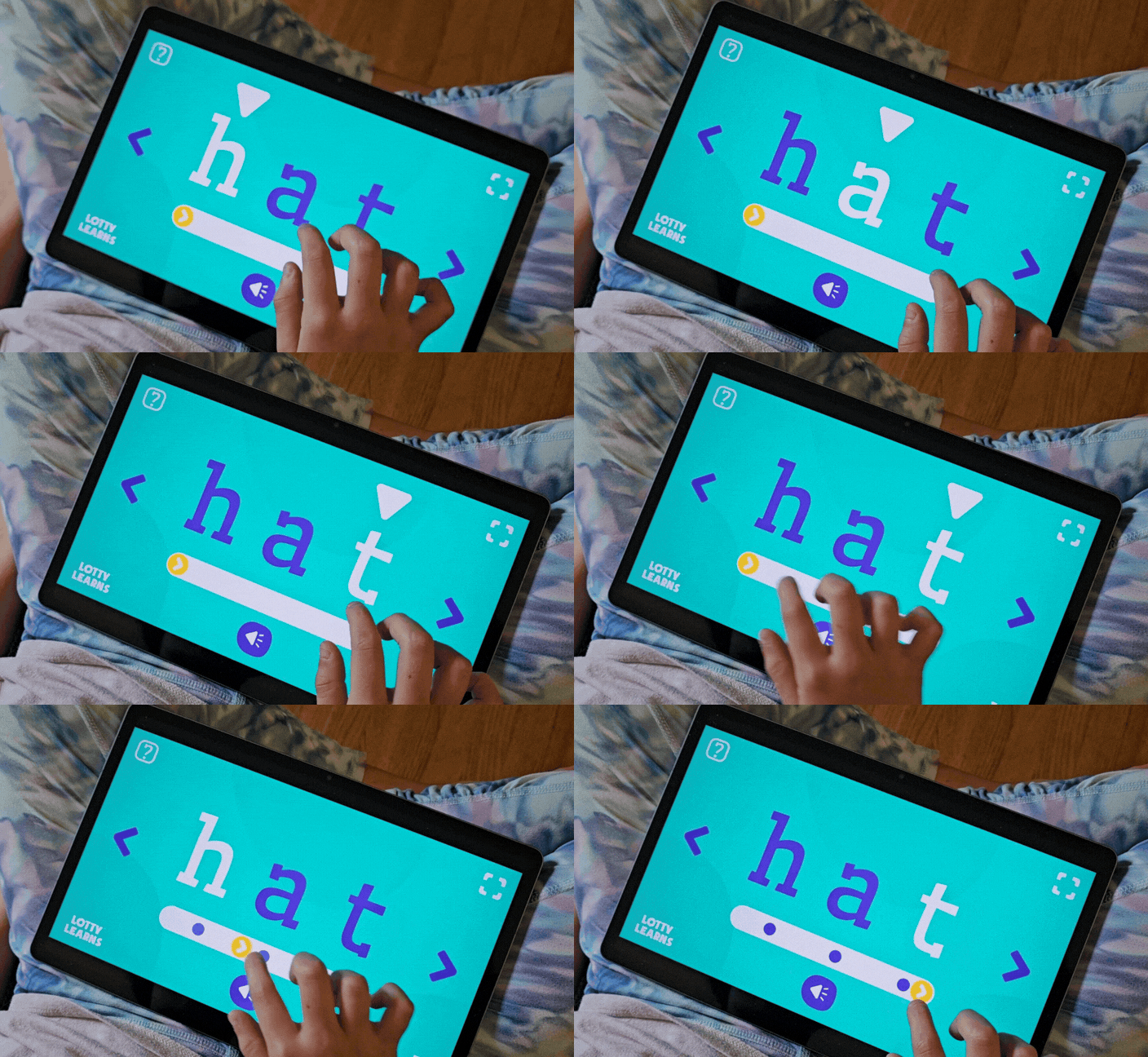
Child using the Lotty Learns Phonics Factory to tap letter sounds and learn to read real words
Physical games lay the groundwork. But at some point your child needs to sit down with real words and actually work through them. That is where the Lotty Learns Phonics Factory comes in.
The Phonics Factory is not a game. There are no rewards, no levels, no rush. It is a set of focused tools that you and your child use together. Your child clicks each letter inside a real word to hear its sound, then uses a blending slider to bring those sounds together into a word. You sit with them, guide them, and help when they get stuck. It is calm. It is focused. And it is designed to feel like real learning, not entertainment, because that is exactly what it is. Ten minutes a day with you by their side is all it takes to start seeing real progress.
Try the Phonics Factory free for 7 days and see what focused practice looks like.
Common Questions About Teaching Phonics Through Play
What age should I start playing phonics games with my child? You can start as early as age 2 with simple sound awareness activities like Say It Back, where you say a sound and your child repeats it. More active games like Sound Race and Letter Sound Hopscotch work well from age 3 onward. By ages 4 and 5 children are ready for word building games that involve actual reading and blending.
Do phonics games actually help children learn to read? Yes, but they are one piece of the puzzle. Phonics games build phonemic awareness and letter sound recognition, which are the foundations of reading. But at some point children also need focused practice with real words. Games get them ready. Tools like the Lotty Learns Phonics Factory help them take the next step.
How often should we play phonics games? Even 10 minutes a day makes a real difference. Consistency matters more than duration. Short daily sessions build the kind of automatic letter sound recognition that turns into fluent reading over time.
Are phonics apps the same as phonics games? Not quite. Physical games involve real interaction between you and your child, which builds both phonics skills and engagement with learning. Most phonics apps are built around entertainment first, which can work against the calm focused practice that real reading requires. If you use a digital tool, look for one that focuses on real word practice rather than rewards and animations.
What is the difference between phonics and phonemic awareness? Phonemic awareness is the ability to hear and play with sounds in spoken language. Phonics connects those sounds to written letters. Both matter. The games in this article build phonemic awareness. When your child is ready to connect those sounds to actual words on a page, the Lotty Learns Phonics Factory is a great next step.