
From Sounds to Stories: How Phonics in Reading Unlocks Literacy

As a parent, you want your child to have the best possible start in life, and that includes a strong foundation in reading. But did you know that one of the most effective ways to teach reading is through phonics instruction? Phonics is the method of teaching children to read by focusing on the relationship between sounds and letters. In this article, we will explore why learning phonics at an early age is crucial for developing strong reading skills, and how you can incorporate phonics instruction into your child's reading program.
Phonics for Reading Development
Phonics plays a critical role in learning to read. When children are taught phonics, they learn to decode words by breaking them down into individual letter sounds and then blending those sounds together to form words. This ability to decode words is essential for reading comprehension and fluency. Research has shown that children who are taught phonics early on are more likely to develop strong reading skills and achieve reading proficiency later on.
Benefits of Early Phonics Instruction
Learning the phonics method at an early age has numerous benefits that extend beyond just reading ability. Early exposure to phonics instruction can enhance cognitive and language skills in children, resulting in improved communication abilities. Additionally, early phonics instruction can lead to increased confidence and motivation in reading. As children become more proficient in reading, they are more likely to enjoy reading, which can foster a lifelong love of reading.
Moreover, phonics instruction can also improve spelling and writing abilities. When children learn how to pronounce words correctly, they also learn how to spell them correctly. This leads to better writing abilities, which are essential for success in school and later in life.

Ways to Teach Phonics to Young Children
Teaching phonics to young children can be done in a variety of ways. One method is through the use of a phonics program. Many schools use phonics programs that provide a structured approach to teaching phonics skills. These programs often use a variety of activities, such as games, songs, and worksheets, to help children learn and reinforce phonics skills.
Another effective method of teaching phonics is with fun interactive lessons. These lessons typically involve teaching children about the relationship between letters and sounds. This can be done through the use of flashcards, letter-sound charts, and other visual aids. It's important to keep phonics lessons fun and engaging for children, as this will help them stay motivated and interested in learning.
Tips for Parents
As a parent, you can reinforce phonics skills at home by encouraging your child to read books that focus on phonics. Look for books that emphasize sound-letter relationships, such as Dr. Seuss books or the Bob Books series. You can also play phonics games with your child, such as "I Spy" or "Rhyme Time," to help them develop phonemic awareness.
It's also important to read with your child regularly. Reading aloud to your child not only helps to develop their reading skills, but it also fosters a love of reading. Additionally, be sure to praise your child's efforts and progress in reading. Positive reinforcement can go a long way in boosting their confidence and motivation.
Common Misconceptions About Phonics
There are several common misconceptions about phonics instruction. One of the most common is that phonics is boring or outdated. However, many phonics programs and lessons incorporate fun and engaging activities that keep children interested and motivated.
Another misconception is that phonics is only for struggling readers. In reality, phonics instruction is beneficial for all children, regardless of their reading level. Learning phonics early on can prevent reading difficulties later on, and can help children achieve greater success in reading and writing.
Putting Phonics Into Practice
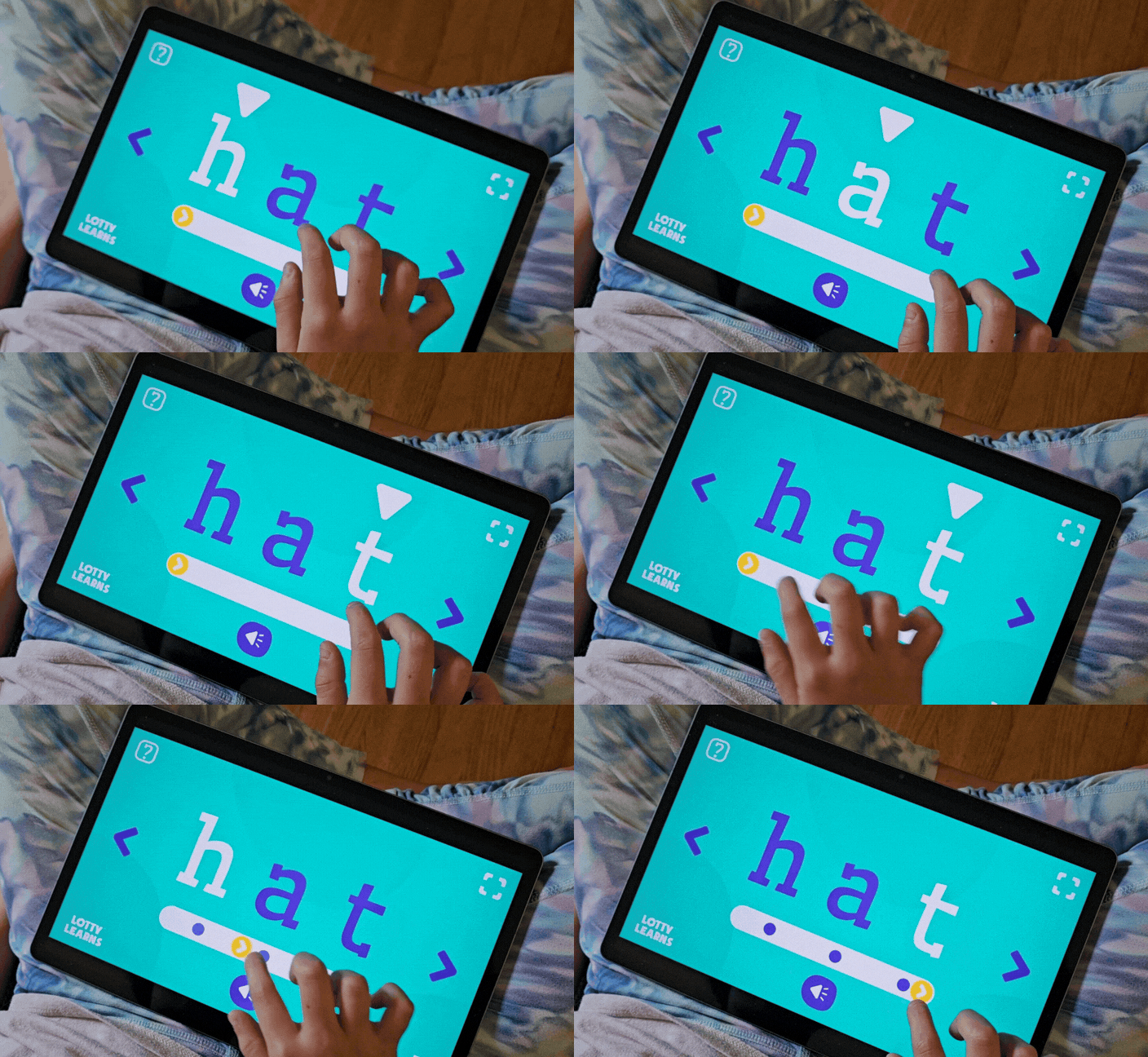
Understanding why phonics matters is the first step. The next step is giving your child the opportunity to practice with real words, consistently and without distraction.
That is exactly what the Lotty Learns Phonics Factory is built for. It is not a game and it is not a rigid curriculum. It is a set of focused tools that you and your child use together. Your child clicks each letter inside a real word to hear its sound, then uses a blending slider to bring those sounds together. You sit with them, guide them, and help when they get stuck. No rewards. No animations. No stimulation designed to distract. Just calm, focused practice with real words, ten minutes at a time.
From Sounds to Stories: Your Phonics Questions Answered
What is phonics and why does it matter for learning to read? Phonics is the method of teaching children to connect letters to sounds and blend those sounds together to read words. It is widely considered the most effective foundation for early reading because it gives children a system for decoding any word they encounter, not just the ones they have memorized. A child with strong phonics skills can tackle unfamiliar words independently, which is the true mark of a reader.
When should I start teaching my child phonics? You can begin building phonemic awareness, the ability to hear and play with sounds in spoken words, as early as age 2 through simple sound games and activities. More focused phonics practice connecting letters to sounds is typically ready to begin around ages 3 to 4. The earlier you start the stronger the foundation your child will have when formal reading instruction begins.
What is the difference between phonics and phonemic awareness? Phonemic awareness is the ability to hear and manipulate sounds in spoken language. It is an auditory skill that does not involve print at all. Phonics connects those sounds to written letters. Both are essential for reading. Phonemic awareness typically develops first and then phonics builds on it by connecting what a child hears to what they see on the page.
How long does it take to learn phonics? Every child develops at their own pace but most children who receive consistent phonics instruction from ages 3 to 5 are able to start decoding simple words within a few months. Short daily practice sessions of around 10 minutes are more effective than longer occasional ones. Consistency is the most important factor.
Is phonics only for children who are struggling to read? No. Phonics instruction benefits every child regardless of ability. Children who receive explicit phonics instruction early become stronger readers faster, and children who might otherwise struggle avoid that struggle entirely. Starting early and being consistent gives every child the best possible foundation for reading success.
How can I teach phonics at home without any teaching experience? You do not need any teaching background to support your child's phonics development at home. The most effective thing you can do is sit with your child, practice with real words, and give them the chance to sound things out with you guiding them. Tools like the Lotty Learns Phonics Factory are designed specifically for parents to use with their children at home, no lesson planning or teaching experience required.