
The 10 best "learn to read" toys for kids

Why Hands-On Toys Help Kids Learn to Read
Reading is the cornerstone of childhood education. A child who learns to read early develops stronger focus, improved memory, a richer vocabulary, and a deeper ability to understand the world around them. These are not just academic skills. They are life skills that will serve your child throughout school and far beyond.
The path to reading success does not start in kindergarten. It starts at home, during the early years, long before a child ever sits in a classroom. Enjoying books with your child is a wonderful foundation. But introducing hands-on toys and games that let kids physically interact with letters, sounds, and words builds the kind of early phonics awareness that makes learning to read much easier when the time comes.
What makes a good learn to read toy? The best ones are hands-on and low tech. They give children something to touch, move, and manipulate rather than just watch. They are designed to be used with a parent sitting alongside, guiding and encouraging rather than handing the toy over and walking away. And they focus on building real skills like letter recognition, phonics awareness, sight word fluency, and decoding rather than just keeping a child entertained.
We have put together a list of the 10 best learn to read toys for kids. These are parent friendly, low stimulation picks that build real reading foundations without relying on screens or gamified apps.
Letter Recognition
Before a child can read a single word they need to know their letters and the sounds those letters make. Letter recognition is the very first step on the path to literacy, and the earlier a child builds that foundation the easier everything that follows becomes.
The best letter recognition toys do more than just teach the ABCs. They connect each letter to its sound, helping children build what educators call phonemic awareness, the ability to hear and identify individual sounds in words. This is the single most important skill a child needs before they can begin to decode and read words on their own.
1. LeapFrog Tad's Fridge Phonics Magnetic Letter Set
The LeapFrog Fridge Phonics set is one of the most popular early phonics toys for good reason. Each magnetic letter clicks into a base that says the letter name and its sound out loud, connecting sight and sound every time your child picks up a letter. It lives on the fridge which means phonics practice happens naturally throughout the day without any structured sit-down time. A great first step for toddlers who are just beginning to explore letters and sounds.
Best for ages 2 to 4
2. Humerry Wooden Spelling Game with Letter Tiles
This wooden spelling game bridges the gap between knowing letter sounds and building real words. Kids match 100 smooth wooden letter tiles to illustrated flashcards, physically spelling out each word letter by letter as they sound it out. The tactile hands-on nature of the toy makes the connection between letters and sounds feel concrete and real. Best used with a parent sitting alongside to guide and celebrate each word your child builds.
Best for ages 3 and up
Learning Sight Words
Sight words are the most commonly used words in the English language, words like the, and, is, he, she, they, and was. Many of these words do not follow standard phonics rules, which means they cannot be sounded out the way other words can. Children need to recognize them instantly on sight in order to read fluently.
Building a strong bank of sight words works alongside phonics instruction to help children read more confidently and smoothly. The best sight word toys make the necessary repetition feel active and engaging rather than like a chore.
3. Sight Words Swat by Learning Resources
Sight words are the most common words in the English language and children need to recognize them instantly to read fluently. This game makes the repetition of learning them feel competitive and physical rather than like a drill. Players race to swat the correct word from a scattered pile using a foam fly swatter, covering up to 220 Dolch sight words in a format kids genuinely want to play again and again.
Best for ages 3 to 8
4. The Fidget Game Sight Words with Pop Fidget
This game combines sight word practice with the satisfying sensory experience of a pop fidget toy, making repetition feel rewarding rather than tedious. Players read a sight word card correctly to earn a dice roll and pop bubbles on their board, with the first to pop all their bubbles winning. It comes with five levels of sight words from pre-k through grade 3 so it grows with your child over several years of learning.
Best for ages 3 to 10
Developing writing skills
Writing and reading are more deeply connected than most parents realize. When a child practices forming letters by hand they are reinforcing the visual memory of each letter shape, which in turn helps them recognize those letters more quickly when reading. Writing also strengthens fine motor skills and builds the kind of focused attention that reading requires.
The best writing toys for early readers give children a mess free, low pressure way to practice forming letters repeatedly without the frustration of pencil and paper.
5. Write and Learn Creative Center by VTech
Writing and reading are more connected than most parents realize. When a child practices forming letters correctly they are reinforcing the same visual memory they need to recognize those letters while reading. This toy guides children through the correct stroke order for every uppercase and lowercase letter on a mess free magnetic surface, giving immediate feedback and keeping practice low pressure and repeatable.
Best for ages 3 to 6
6. SGILE Magnetic Drawing Board
For parents who want a simple mess free surface for letter and word writing practice, the SGILE Magnetic Drawing Board is a clean and easy option. The full alphabet is printed along the border for reference and the large drawing area gives little hands plenty of room to practice. No lessons, no electronics, just a parent and child working through letters and words together at their own pace.
Best for ages 3 to 8
Building Phonics and Word Reading Skills
Letter recognition and sight word practice build the foundation. But the skill that actually unlocks reading is phonics, the ability to connect letters to sounds and blend those sounds together to decode words. A child who can decode can pick up any word they have never seen before and sound it out. That is the difference between a child who has memorized a few words and a child who can actually read.
The toys in this section are specifically designed to build phonics and decoding skills. They are best used with a parent sitting alongside, guiding the child through each word and celebrating each breakthrough.
7. Little Bud Kids Spin and Read CVC Phonics Blocks
This wooden toy is one of the most direct phonics tools on the list. Five wooden rods let kids spin consonants around a central vowel to build three letter words, seeing and hearing how swapping one letter completely changes the word. This kind of word family practice builds the pattern recognition that makes decoding faster and more natural over time. A great tool for a child who is ready to start blending sounds into real words.
Best for ages 3 and up
8. Torlam Phonics Puzzle Cards
These laminated self-correcting puzzle cards cover the full range of early phonics skills across four progressive levels, from simple short vowel words all the way through digraphs, long vowels, and silent e. Kids match puzzle pieces to build and read words, and the puzzle format means they know immediately whether they got it right without needing a parent to check every answer. One set that grows with your child from the very beginning of phonics through early independent reading.
Best for ages 4 and up
9. BenBen Spelling Game with Wooden Letter Tiles
This game gives children a hands-on way to practice building and reading real words using smooth wooden letter tiles and illustrated phonics flashcards. Your child selects tiles one at a time to spell each word, sounding out every letter as they place it. The physical process of handling each letter and placing it in sequence reinforces the letter-sound connection in a way that looking at a page simply cannot. A straightforward tool that puts the parent in control of the pace and difficulty.
Best for ages 4 and up
10. CVC Word Race Phonics Game
This game adds energy and competition to phonics practice by having players race to build and read CVC words correctly using wooden letter blocks before their opponent. The time pressure encourages faster letter-sound recall, which is exactly the kind of automaticity beginning readers need to develop. Works best with a parent playing alongside a child rather than two children competing unsupervised, especially for children who are still building confidence with new words.
Best for ages 4 and up
When Your Child Is Ready to Go Further
The toys on this list are a great way to build early reading awareness and give children a strong head start with letters, sounds, and words. Physical, hands-on practice with a present parent is one of the most effective things you can do to prepare a young child for reading.
But at some point your child needs to move beyond toys and into focused practice with real words, sounding out each letter, connecting it to its sound, and blending those sounds together to decode words they have never seen before. That is the step that turns a child who knows their letters into a child who can actually read.
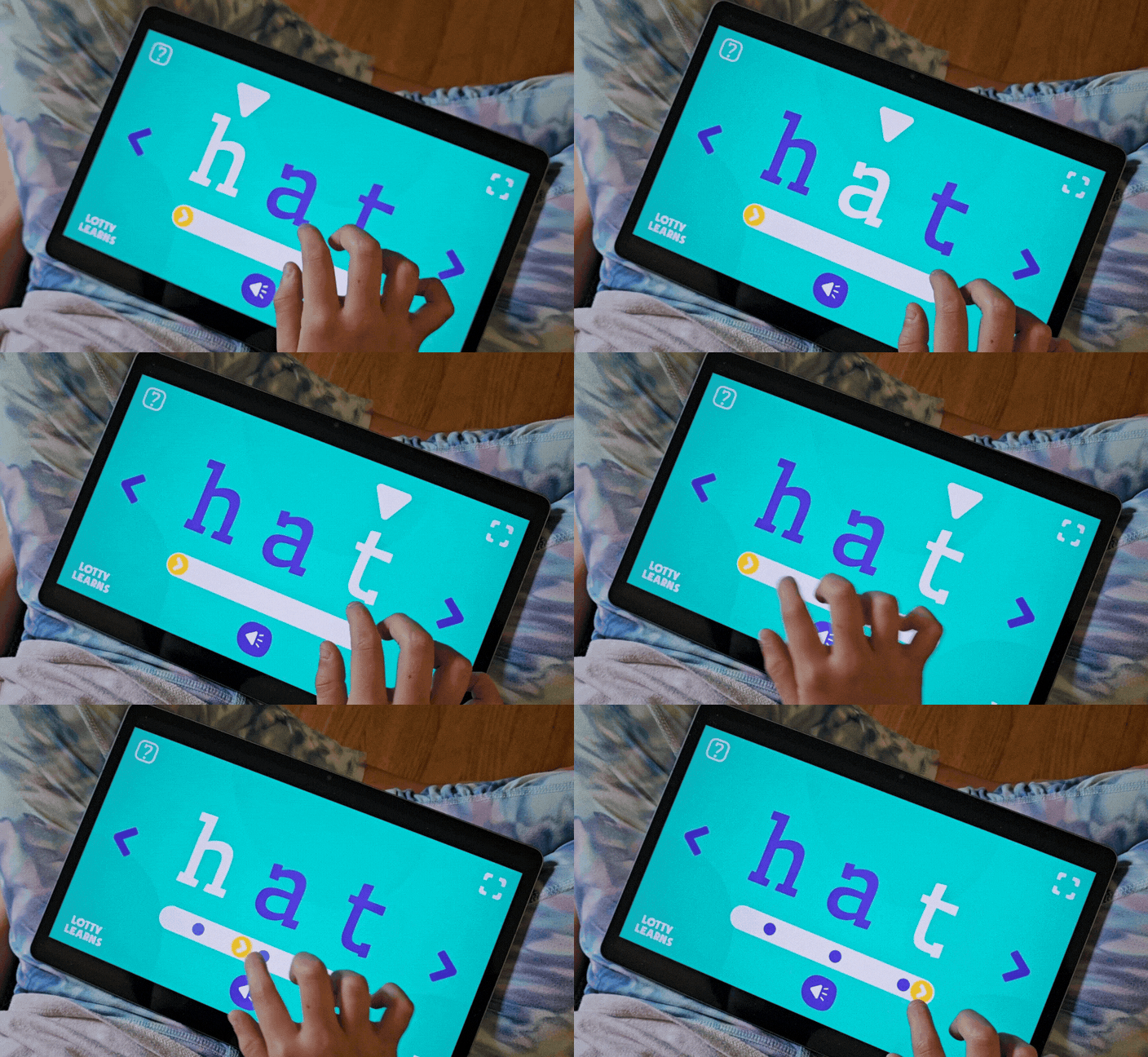
That is exactly what the Lotty Learns Phonics Factory is built for. It is not a game and it is not a screen full of animations and rewards. It is a set of focused tools that you and your child use together. Your child clicks each letter inside a real word to hear its sound, then uses a blending slider to bring those sounds together into the word. You sit with them, guide them, and help when they get stuck.
Calm. Focused. No distractions. Just real word practice, ten minutes at a time, with you right there beside them.
Try the Phonics Factory free for 7 days!
Learn to Read Toys FAQ
What are the best toys to help kids learn to read? The best learn to read toys are hands-on, low tech, and designed to be used with a parent rather than independently. Toys that build letter recognition, phonics awareness, sight word fluency, and word building skills give children the foundational tools they need to become confident readers. Wooden letter tiles, phonics puzzle cards, sight word games, and CVC word building sets are all excellent choices for children ages 2 through 8.
What age should kids start using learn to read toys? You can introduce simple letter recognition toys as early as age 2. Toys that involve matching letters to sounds and building basic awareness work well from age 3 onward. Word building and phonics games that require blending sounds into words are typically best from age 4 and up. Every child develops at their own pace so follow your child's lead and do not rush the process.
Are learn to read toys better than reading apps? Hands-on toys offer something most reading apps cannot, physical interaction with letters and words alongside a present parent. Most reading apps are built to entertain first and educate second. They use rewards, animations, and constant stimulation to hold a child's attention, but over time this kind of high stimulation environment makes it harder for children to sit with the calm, focused practice that real reading requires. Physical toys used with a parent build stronger and more lasting reading foundations.
What is the difference between phonics toys and sight word toys? Phonics toys teach children to connect letters to sounds and blend those sounds together to decode words. This is the foundational reading skill that allows a child to read any word they encounter, even one they have never seen before. Sight word toys help children memorize the most common words in the English language that do not follow standard phonics rules. Both skills matter, but phonics is the more important foundation. A child who can decode phonetically will always have a path to reading new words. A child who only knows sight words is limited to the words they have already memorized.
How do I use learn to read toys effectively? The single most important thing you can do is sit with your child while they use these toys rather than leaving them to play independently. Guide them through each word, encourage them when they get stuck, and celebrate every small win. Keep sessions short, around 10 minutes, and aim for daily practice. Consistency matters far more than duration. A child who practices for 10 minutes every day will develop reading skills far faster than one who sits with a toy for an hour once a week.
When should my child move beyond toys to real reading practice? When your child can consistently identify letter sounds without hesitation and is beginning to blend simple three letter words, they are ready to move into focused practice with real words on a page. Tools like the Lotty Learns Phonics Factory are designed specifically for that transition, giving parents a simple and focused way to practice real word decoding together at home without the distraction of games or rewards.